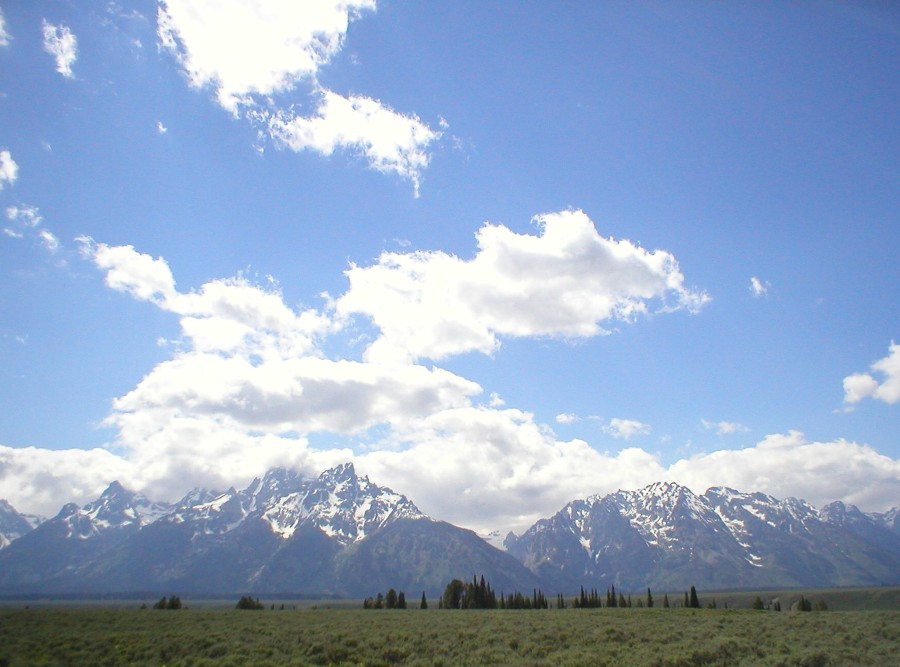
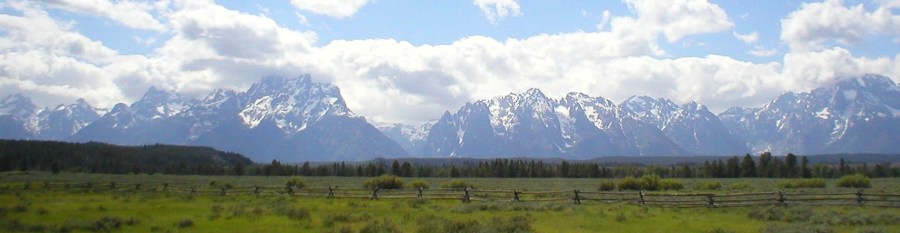
There is a ride you take after exiting off to 287 outside of Lander, where the two-lane glides over what seems like a four or five-foot cliff, taking everything but the car and the path on a pronounced but relatively light descent. You stand out in the world there, a few feet or the world above the surroundings, and it's just enough to give you the effective vantage point over the green fields and the blue backbone of Wyoming. Fences to the right and left of the car flying in clearer air realize a still greater distance between the stone jasmine humps of life below that you may have left before the real rediscovery, the myrrh-colored barrier of the cliff by your tires and the original flowers in the sky you first aimed for. The jagged ocean haze stretching there and the luggage for that shortcut.
People boast Wyoming as the "what you see is what you get" world, but like every play of language there is a mask strewn with old glue, falling gently in places, and leaving just enough blemishes to strengthen the endeavors your mother has always stigmatized. Whichever way you take it, falsity or closer intimacy, it's not what you've come for.
Watch for the Lookout sign after the forty-seven mile marker to Snake River, and take the old ranch road on the west side of the highway. A blockade of trees leaves you tenderly cut but in view of a tributary. A mile south down the water leaves you in disarray.
It's where you and your husband would come when you were much, much younger, careless and socks stuffed with what entertainment there is in Jackson Hole. Wide-eyed look covering a narrow desire. Blankets and love-making, it's where he asks you to marry him. It's where he suggests building a ranch on the open plot a few miles farther south, on the opposite side of the highway.
It's a tough life, full of labor and white knuckles, and you'll be happy and proud, but breaking all the while. It's satisfying, something you can only have in this country.
You'll stop going there after a few years, and by the time forty more years have passed he will have been dead for five, and you'll have taken nearly five to build the courage to return.
He won't tell you what he buried there: blankets upon blankets marked with the blood it takes to get there. Hats and extra clothes. Pictures of his different endeavors during his trips to town, while you are at the ranch taking care of different problems. (The chickens will let loose and kids will be crying.) A pile of rings: one a wedding band. He'll always say that he'll bury it here before he dies.
In the back of the hole you'll find after the body of water floods, you'll regret touching the mess of sheets soaked and colored, poorly hidden due to arthritic joints and lack of tools. It won't press when you touch it, and it won't be warm like what you're used to. It'll be cold and lifeless, but dangerous and threatening in the worst way.
You will have to find it all on your own, and you will when the time comes. What it takes to bury it will be murder, and the thought of the will it must have taken to bury it will tell you that it must have been worth it. It will be the breaking point.
You'll all bury something, loosely and poorly glued, with any luck. Hopefully you'll be too old to do it thoroughly, and it will hang down and mark the world everyone else has built up. What will you have buried? The realization of being too scared to bury anything, left broken and regretful, scattered and buried yourself in blankets and the secret and real desires of the brave ones?
"What you see is what you get" world, and it's never what you've come for. The branch-bitten arms, blistered hands and mistakes make it, but that's never what you see, just what you get. You'll find it out eventually: it's just never the white love you make it out to be early.
What you get is a realization, but you'll never know when it'll come: it takes work to make it work here.
|